SA Solution
Means of SA Power
Who holds power in South Africa and what each holds it by — drawn from the SA opinions and the South African policy reforms built on them.
The structure of power in South Africa
A weakened ANC shares power with markets, lenders and watchdogs as capture's damage lingers
Power in South Africa is shared between a weakened ANC in the Government of National Unity and a hollowed-out state. That state is held steady by SARS, the Treasury and the Reserve Bank, and by a small wealthy minority whose spending and taxes keep the economy running. Debt interest and salaries take up most of the budget, so the state is turning to private capital to repair the power grid and the railways. Where institutions failed, journalists, business and voters have checked power, while covert networks and paid street movements, by disputed accounts, exploit poverty and xenophobia. The structure is moving away from one-party patronage towards coalition, market discipline and private provision.
Key points
- Party, patronage and capture. The ANC lost its majority in 2024; after 2009, captured procurement and centralised spending sent Eskom and Transnet money to connected middlemen, not to maintenance.
- Budget, debt and lenders. Debt rose from 22% to 78% of GDP, and interest takes 16 rand in every 100 spent, while credit ratings reward coalition discipline with lower borrowing costs.
- Capital carries the economy. The richest 15% account for 85% of consumer spending and fund welfare grants; private firms are now invited into electricity and rail.
- Institutions, press and voters. SARS, the Treasury and the Reserve Bank steady revenue, debt and the rand, while investigative journalists and voters call power to account where commissions fell short.
- Hidden networks and the street. Mbeki alleges a never-dismantled security network sabotaged SARS, Eskom and the 2024 vote; others call xenophobic mobilisation paid. These claims need checking against evidence.
- Where the levers lie. Change depends on muhasaba (accountability) for capture, amana (stewardship) of the budget for jobs and skills, less riba (interest-bearing) debt, and islah (reconciliation).
- Ordinary South Africans and Muslims. Jobless, poorly schooled South Africans bear the cost; Muslims, protected by religious freedom, can resist the scapegoating of migrant shopkeepers through zakat (almsgiving) and bridge-building.
Drawn from
- Politics & GovernanceClaim: Black Consciousness, Not Parties, Sparked 1976Max du Preez's firsthand account argues Black Consciousness, not the ANC or PAC, drove the 1976 Soweto uprising, and traces South Africa's path through de Klerk's referendum, post-1994 political decline, and the forces he says still hold democracy together.
- Politics & GovernanceClaim: Xenophobia in South Africa Is Elite-EngineeredA spoken-word audio piece argues South African xenophobia is manufactured by political and economic elites, who stage crises and fund street movements to deflect anger from their own looting of state assets onto foreign nationals.
- Wealth & EconomicsClaim: State Capture Behind South Africa's Growth StagnationAn economic analysis crediting Chief Economist Dr. Azar Jameen traces South Africa's stagnation since 2012 to state capture of procurement and policy after 2009, while crediting extreme inequality, social pluralism and institutional discipline with keeping the economy from collapsing.
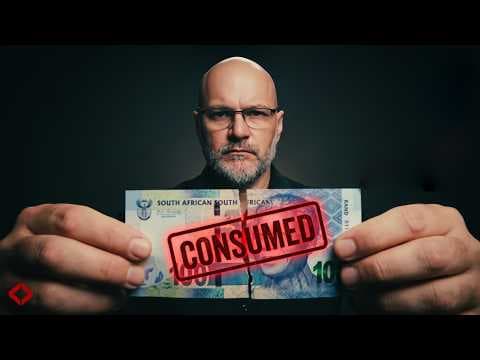
- Francois on South Africa's Budget Consuming GrowthFrancois argues South Africa's budget is built to consume the economy rather than grow it, citing a full rand-by-rand breakdown, rising unemployment and the state's turn to private capital.
- Mbeki's Sabotage Claim on ANC Power LossThabo Mbeki says the ANC was blocked from governing by a sabotage campaign and a never-dismantled security network, citing SARS's collapse, the 2008 blackout, July 2021 unrest and the 2024 election.

- Mbeki's Claims of Deliberate Sabotage of SARS and EskomIn a speech, Thabo Mbeki argues that SARS and Eskom's crises, the ANC's 2024 vote collapse and the July 2021 unrest were all deliberately engineered by a counter-revolution, not accidents or spontaneous anger.
