National Solution
National Means of Power
Who holds power within a nation and what each holds it by — drawn from the national opinions and the national policy reforms built on them.
The structure of power within a nation
Power rests on a captured budget, hidden networks and business, checked by press and voters
The governing party and its alliances hold power through patronage over procurement and state-owned enterprises. Covert security networks that survived earlier regimes are accused of sabotaging state agencies, staging unrest and shifting votes. Salaries, transfers and interest swallow the budget and leave little for growth, so the state leans on private capital, credit-rating agencies and lenders, whose confidence rises when parties govern together in a coalition. A narrow wealthy minority pays for both consumer spending and welfare, while elites use paid street movements to turn anger over looted services onto foreigners. The finance ministry, revenue authority and central bank keep the system steady, but journalists, voters and civil society remain the final check.
Key points
- Party and patronage. The governing party and its alliances rule through patronage, as middlemen capture procurement and empowerment schemes, starving state-owned enterprises and shutting out smaller firms.
- Covert networks and sabotage. Security machinery never dismantled after regime change is accused of crippling the revenue authority and power utility, staging unrest and steering whole blocs of votes.
- Budget, debt and lenders. Wages, transfers and interest consume most of the budget, so lenders, rating agencies and private investors gain leverage over electricity, rail and policy.
- Capital and inequality. A wealthy minority drives most spending and taxes that fund grants, while corporations escape blame for migrant-labour systems that broke families for generations.
- The street as proxy. Paid street movements turn the jobless poor against foreign neighbours, hiding the dry taps and empty clinics that elite asset-stripping caused.
- Checks and levers. Journalists, commissions of inquiry and voters who reject identity voting hold power to account, while coalition consultation, asset recovery and practical skills open change.
- Citizens and Muslims. Ordinary citizens and Muslims are called to sidq (truthfulness) in exposing looting, to reject fitna (discord), to give zakat (almsgiving) and to press for financing free of riba (usury).
Drawn from
- Politics & GovernanceClaim: Black Consciousness, Not Parties, Sparked 1976Max du Preez's firsthand account argues Black Consciousness, not the ANC or PAC, drove the 1976 Soweto uprising, and traces South Africa's path through de Klerk's referendum, post-1994 political decline, and the forces he says still hold democracy together.
- Politics & GovernanceClaim: Xenophobia in South Africa Is Elite-EngineeredA spoken-word audio piece argues South African xenophobia is manufactured by political and economic elites, who stage crises and fund street movements to deflect anger from their own looting of state assets onto foreign nationals.
- Wealth & EconomicsClaim: State Capture Behind South Africa's Growth StagnationAn economic analysis crediting Chief Economist Dr. Azar Jameen traces South Africa's stagnation since 2012 to state capture of procurement and policy after 2009, while crediting extreme inequality, social pluralism and institutional discipline with keeping the economy from collapsing.
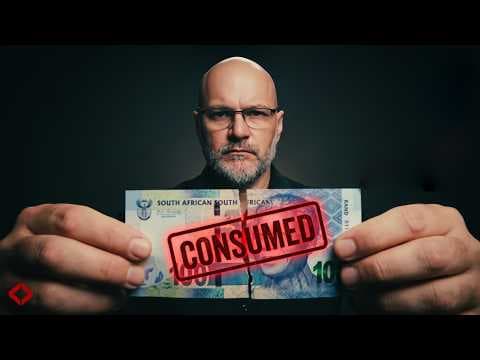
- Francois on South Africa's Budget Consuming GrowthFrancois argues South Africa's budget is built to consume the economy rather than grow it, citing a full rand-by-rand breakdown, rising unemployment and the state's turn to private capital.
- Mbeki's Sabotage Claim on ANC Power LossThabo Mbeki says the ANC was blocked from governing by a sabotage campaign and a never-dismantled security network, citing SARS's collapse, the 2008 blackout, July 2021 unrest and the 2024 election.

- Mbeki's Claims of Deliberate Sabotage of SARS and EskomIn a speech, Thabo Mbeki argues that SARS and Eskom's crises, the ANC's 2024 vote collapse and the July 2021 unrest were all deliberately engineered by a counter-revolution, not accidents or spontaneous anger.
