Expert Opinions
What scholars, writers and speakers argue — from videos, articles, books and talks — each summarised in its own words and filed by subject: the self, people together, and the wider world.
Personal Awareness
Belief
- Claim: Islamic Theology Answers the Modern Meaning CrisisA video explainer summarizes Dr. Nazir Khan's paper "Islam and the Meaning of Life," presenting Islamic theology as a response to a modern "meaning crisis." It covers Tawhid, worship, human purpose, custodianship and suffering, all attributed to the paper and figures it cites.
- Claim: Islam Answers Modern Nihilism, Badat ArguesA video presents author Salim Badat's argument that modern existential despair stems from Western secularization since the Enlightenment and Darwin, and that Islam answers this void with divine purpose, objective morality and ultimate accountability.
 DeathA Muslim wills specialist and a tax adviser discuss what 25 years of writing Islamic wills has taught about wealth, inheritance and family responsibility. They cover Sharia inheritance rules, the treatment of interest income, and how families communicate about money before and after death.
- Free Will vs CausalityA Coherence Academy video lays out the classical Islamic debate over free will and divine predestination, contrasting Al-Ghazali's occasionalism with Ibn Taymiyyah's secondary causality. It presents its source material's case, including an infinite-regress argument and a scriptural defeater, for favoring Ibn Taymiyyah's model, then closes on an unresolved question about responsibility.
- Hadith CertaintyA Coherence Academy video maps a rising online dispute over the authority of Hadith and Sunnah in Islam. It defines the group involved and its arguments, reports causes the speaker gives for the rejection, and sets these against a case for the historical preservation of the Prophet Muhammad's life.
- Preserved Abrahamic ReligionA book argues Abraham was a Muslim rather than a shared patriarch and warns that modern interfaith "Abrahamic religion" movements endanger Muslim faith. A separate speaker argues Christianity's textual history is corrupted, pointing to Quranic oral preservation, denial of the crucifixion and Islam's lack of clergy hierarchy as reasons Islam alone preserves Abrahamic revelation intact.
- Qur'anic PreservationCoherence Academy content contrasts the New Testament's slow, contested canonization with the Quran's immediate self-declaration as revelation, then argues Quranic verses direct Muslims to follow the example of the Sahaba, the first generation of believers, "in goodness."
- Science and FaithA Coherence Academy video lays out evolutionary science as biology's mainstream account of life and weighs it against the Quran's account of Adam and Eve, asking whether belief in a creator and evolution can coexist.
- Axiomatic MoralityA Coherence Academy video reframes "prove God exists" as a question about epistemology rather than a single fact, and argues that belief in God functions as an unprovable foundational "hinge" underlying morality, purpose and reason, contrasting this with a materialist view of those same things as illusion, convention and accident.
- Existence of GodA Coherence Academy video lays out what it calls Dr. Zakir Naik's "prophetic method" for proving God's existence to atheists. Naik rejects the classical philosophical argument from contingency and instead argues from claimed scientific content in the Quran, concluding that the "creator" an atheist would concede to is Allah.
Spirituality & Character
- Claim: Narcissism as a Curable Spiritual StateAn explainer argues that Islamic psychology reframes narcissism not as a fixed clinical disorder but as a treatable spiritual state rooted in interlocking "diseases of the heart." It holds that a crisis-triggered awakening can open a path to repentance and change, while affirming that victims' pain is real and that protecting oneself from such behavior is not a failure of love.
- Claim: Prophetic Practice as a Time-Management BlueprintA video explainer argues that Islamic practice, as taught by the Prophet Muhammad, anticipated modern time-management theory, mapping prophetic conduct onto Rory Vaden's "focus funnel" from Procrastinate on Purpose. It covers prayer, charity, delegation and concentration as examples of this framework.
- An-Nabhani's Take: Identity Through Aligned Belief and InstinctA video explainer builds on Sheikh Taqiuddin an-Nabhani's text "The Islamic Personality," arguing that human identity rests on two aligned pillars — intellect and instinct — unified by Islamic belief and law. It holds that lapses in behavior do not erase a person's identity, and that the underlying creed must be proven through rational and textual evidence rather than accepted on faith alone.
- Claim: Smart People Can Still Act UnwiselyAn article by Tomas Chamorro-Premuzic in Fast Company explores why intellectually "smart" people can act unintelligently in everyday life, arguing that cognitive and emotional/social intelligence are only loosely connected. It offers several explanations and closes by suggesting human irrationality may remain a refuge against AI.
 CommunicationThe narrative covers a video by Prince Ea laying out body-language techniques for public speaking and persuasion, drawing on hand gestures, facial expression, eye contact, posture and clothing.
 DawahDr. Francesca, in a video on Islamic Psychology, argues that feeling "not Muslim enough" stems from Muslim communities judging faith by outward signs rather than the heart. She traces the harm this causes, explains riya as a hidden spiritual danger, and offers a framework built on hope, fear and the nafs's stages to move past it.
- Disciplining the NafsCoherence Academy lays out an Islamic framework for restraining the nafs against the faster-reasoning intellect, presents a scholar's ruling that hijab remains obligatory despite Western hostility, and pairs drinks named in Islamic texts with modern scientific findings.
- Soul vs NarcissismCoherence Academy argues that Islamic psychology and theology answer narcissism, attention, happiness and life's meaning more coherently than secular or clinical frameworks. Drawing on Al-Ghazali, Saleem Badat, Nazir Khan and Jeffrey Lang, it treats ego, suffering and purpose as staged, purposeful and objectively grounded rather than fixed, meaningless or subjective.
- Freedom vs SlaveryTwo Coherence Academy videos argue that modern freedom, built on moral relativism and unlimited individual choice, has produced psychological distress rather than liberation. They propose the Islamic concepts of fitra and nafs as an alternative, drawing on Barry Schwartz, Erich Fromm and Isaiah Berlin to diagnose the problem.
- Fitrah (Original Goodness)Coherence Academy videos present the Islamic concept of fitrah — an innate, incorruptible orientation toward goodness and monotheism — against "original sin" and against a document's comparison of materialism and "inherited guilt theism." The document, relayed in the second video, judges fitrah alone internally coherent on guilt, freedom and justice.
Family & Community
 Islamic Education systemA video featuring Dr. Ahmed Khater opens the question of what it takes to become an Islamic scholar, framing the inquiry as a comparison between traditional seminary training and Western academic education, with the stated aim of exploring challenges facing Islamic scholarship.
 The FamilyA video by Belal Assaad argues that Islam holds husbands and wives equal in worth, with piety as the only real measure, and reinterprets Quranic terms often read as granting men dominance. It also separates authentic hadith on marriage from ones Assaad says are fabricated or weak.
 Stages of child developmentA framework circulated in the material presents Islamic child-rearing as staged by developmental readiness, moral awareness and legal accountability rather than age labels alone, drawing on Quranic terms and hadith. It details two stages, from birth to age seven, before the text cuts off.
Society & Culture
Wealth & Economics
- Claim: Gifting the Family Home Usually BackfiresA video explainer argues that gifting the family home to children to avoid inheritance tax or care fees usually fails, pointing to tax rules that claw the home back into the estate and to local council powers over deliberate deprivation of assets. It presents a composite cautionary case and recommends calculation-based alternatives such as wills, powers of attorney and gifting exemptions.
- Claim: Wealth Runs on a Metabolic Energy BudgetA video on justicecouncil.org argues that financial and career stagnation stem from a strict metabolic energy budget the brain enforces, not from lack of time or desire. It draws on named studies and thinkers to argue that deprivation, dopamine, and an unexamined sense of self all drain this budget before anyone can build wealth.
 Money ManagementA video by Sandeep Swadia argues that once income rises, extra money is best directed toward stamina, skills, security and personal meaning rather than lifestyle upgrades. He draws on psychological research, his own Wall Street career, and the Archegos collapse to argue money's value depends on how it is spent, not how much is earned.
 Protection of wealthIslamic sources address how wealth should be earned, protected, and viewed. They reject both wealth as inherently sinful and poverty as the ideal, hold up wealthy companions as economic models, name protecting wealth a core objective of Islamic law, and discuss trusting Allah for provision.
Social Awareness
Belief
- Claim: Madrasa Curricula Breed Fragile, Rote FaithIn a discussion aired on the Islamic Oasis channel, Mufti Moynal Abu Hamza argues that traditional madrasa education is static, rote-based and disconnected from the ideologies students meet in secular schooling and university. He proposes a curriculum overhaul and a new definition of success for Islamic education.
 ChristianityA video by Nils Glenn traces the 1947 discovery of the Dead Sea Scrolls near Qumran and the community identified as the Essenes, drawing on Josephus, Philo of Alexandria and Pliny the Elder. It covers their communal life, initiation rites, apocalyptic theology and dealings with Jerusalem's political establishment.
Spirituality & Character
Family & Community
 Three Seven-Year Stages of Raising ChildrenA preacher on Eman Broadcast lays out a hadith-based framework for raising Muslim children in Western countries, dividing childhood into three seven-year stages of play, discipline and companionship. He warns that cramped Western housing and screen time harm children's mental health, and urges chores, outings and moral stories as remedies.
- Al-Nabhani's Rules for Male-Female RelationsA video explainer breaks down Taqiuddin al-Nabhani's text "The Social System in Islam," which defines the "social system" narrowly as the rules governing relations between men and women. It presents the text's theory of instincts and procreation, its critique of Western ideas, and its detailed rules for modesty, public mixing and private life.
- Claim: Nabhani's Rules for Gender Relations in SocietyA video on justicecouncil.org summarizes Taqiuddin an-Nabhani's text "The Social System in Islam," outlining its definition of a social system as the rules governing male-female interaction, its view of the procreation instinct, and its rules for public mixing, private life and modesty.
- Iman's Case: Polygyny Benefits WomenA video posted on justicecouncil.org presents arguments from Iman, featured on the channel Non-Monoman TV, on what she describes as the benefits of polygyny for women. The video's narrator summarizes her points on emotional security, pooled resources, confronting jealousy, and collective healing.
 Claim: Standards, Envy and Choice in DatingThe speaker argues that modern women's dating dissatisfaction stems from unmet standards, envy and too many options, framed through the seven deadly sins. The argument cites divorce data, dating ratings, app figures and studies on social media and choice.
- Raising Muslim ActivistsDr. Mohsen Ansari sets out a diagnostic and household blueprint for raising Muslim children in the West that ends in justice activism. An article titled "When the World Falls Away," credited to "Muslim parents in training," reads Surah Ibrahim 14:48 as a three-stage stripping away of the world and applies it to parenting as a call for voluntary self-reckoning.
- Reviving the Family MadrasaMaterial on raising and educating Muslim children amid secular pressures spans parenting guidance for wavering teens, an Islam21C discussion on family and gender roles, Mufti Moinil Abu Hamza's madrasa-reform framework, an article framing Islamic rules as mercy, and an account of the Prophet Muhammad's method for training scholars.
- Marriage and CharacterMarriage advice, a strategist reading of Prophet Muhammad's rise, and a communication-training explainer together trace success to personal character, alliance-building and trainable skill. Mufti Abdurrahman Manjara advises on building a lasting Muslim marriage, Omar Khayyam Sheikh's book casts Muhammad's integrity and diplomacy as deliberate strategy, and a separate explainer argues charisma and public speaking are trainable through nervous-system control and word choice.
Society & Culture
Wealth & Economics
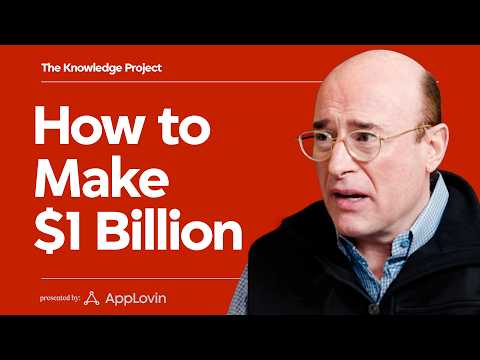 Business Lessons That Made BillionsThe narrative draws on a Knowledge Project Podcast interview with Brad Jacobs, founder of eight billion-dollar companies, who explains that his growth came through hundreds of acquisitions rather than rigid planning. Jacobs also describes how cognitive therapy shaped his decision-making and recounts a conversation with Ray Kurzweil on AI and the future of humanity.
 Islamic EconomicsA video from IFG argues that the Muslim world needs a distinctly halal form of private equity — funded by equity rather than interest-bearing debt — to grow small Muslim-owned businesses into large global companies. It contrasts this with conventional, debt-driven buyouts it says weakened Toys R Us and ASDA, and points to IFG's own pharmacy investment as an example.
Politics & Governance
Muslims in the West

Sects & Groups
Global
Belief
- Claim: Cambrian Explosion Points to Intelligent DesignStephen C. Meyer's "Darwin's Doubt" argues that the abrupt appearance of around twenty animal body plans in the Cambrian period, and the vast new genetic information this required, cannot be explained by mutation and selection or by rival evolutionary theories. He concludes intelligent design is the better explanation, a view most evolutionary biologists reject.
- Claim: Classical Theology Sets High Bar for TakfirDrawing on Sheikh Hamza Karamali, an explainer video lays out how traditional Islamic theology defines belief and limits the practice of declaring someone a non-believer (takfir). It contrasts classical epistemology with modern online uses of the label, including cases involving public figures and converts.
- Claim: Paul Corrupted Christianity, Islam Preserved TruthA video lays out one speaker's argument for Islam over Christianity, built on claims about Paul's role in corrupting early teaching, the preservation of the Quran against Bible translation loss, denial of the crucifixion, and Islam's lack of racial hierarchy.
 Video on Revelation Versus Liberal IndividualismA video from One Nation Media TV argues that liberalism places personal desire above divine revelation as the source of morality. It says Muslims should reject liberalism as a worldview, while acknowledging some shared values such as justice and dignity.
 One Nation Media: Islam as Total WorldviewA video from One Nation Media TV argues that Islam is not a private religion but a complete worldview covering governance, law, economics and social life, rejecting modern secular, liberal, capitalist and nationalist frameworks.
Muslims in the West
- Claim: Mosques as Centers of Humility, Not ConflictThe narrative covers a 2011 address by Mirza Masroor Ahmad in Oslo, delivered weeks after Norway's July 22 attacks, which argues mosques exist for humility and worship, condemns terrorism using Islamic teaching, and describes early Islamic wars as defensive and tightly restricted. It also presents the new Oslo mosque as a civic pledge of interfaith harmony.
- Claim: Colonial "Rescue" Narratives Trap Hijab ChoicesA video argues that education and independence do not erase religious faith, and that stereotypes about hijab-wearing force Muslim women into a no-win judgment whatever they choose. It traces this "rescue" framing to colonial-era justifications and argues real advocacy means defending choice itself.
- Claim: Islam as Political System Clashing with Western LawAn explainer presents a conversation from the I-3 Institute arguing Islam is a complete political, economic, social and spiritual system incompatible with secular Western constitutions. The speakers set out a strategy for Muslims in the West and criticize assimilation as a sign of weak faith.
- Claim: "Westernism" Traps Westerners in Self-IgnoranceThe YouTube channel Middle Nation, in a piece titled "You Don't Know Them," argues that Westerners are shaped by a condition it calls "Westernism," which it says makes genuine self-knowledge and outside understanding of them impossible. The channel describes uniform behavioral symptoms, a contradiction between individualism and self-knowledge, and a permanent split between reality and pretense.
Sects & Groups
- Claim: Hizb ut-Tahrir's Staged Caliphate StrategyThe narrative covers a video explainer on a foundational text attributed to Hizb ut-Tahrir, describing its methodology for pursuing a global caliphate. It details how the text classifies territory, dismisses non-political forms of change, and sets out a staged political strategy.
- Claim: Hizb ut-Tahrir's Manifesto for a Global CaliphateBased on Hizb ut-Tahrir's own translated manifesto, an explainer sets out the group's reasoning: all current Muslim-majority states are religiously illegitimate, the sole fix is a single caliphate, and charity, academia and democratic participation are all rejected as paths to that end.
- Hizb ut-Tahrir's Three-Stage Plan for Islamic StatehoodThe text Concepts of Hizb ut-Tahrir, by Taqiuddin al-Nabhani, sets out a theological and political framework for Islamic revival, diagnosing historical decline and prescribing an inseparable "idea" and "method" grounded purely in divine law. It culminates in a three-stage strategy for building a state that implements the ideology and spreads it globally.